25 Years, Millions of Cycles: Designing Interactive Hardware That Outlasts Its Audience
Author:
Francis Mbuyamba
Context
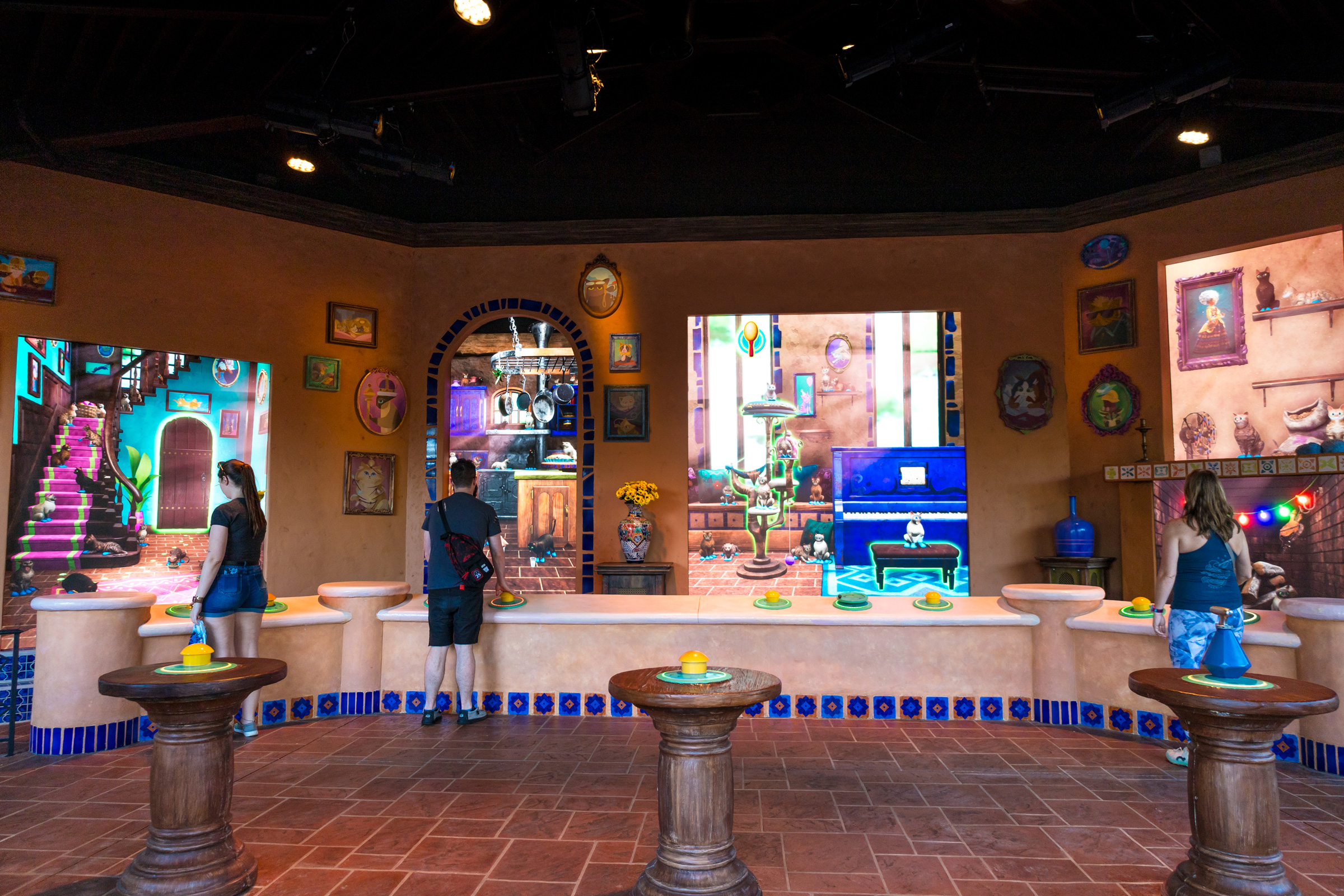
Working alongside a creative team responsible for the attraction's theme, our task was to translate concept art into functional reality. The target users were primarily young children, meaning the hardware had to be intuitive but practically indestructible. I helped design a suite of seven custom interactive devices for a major themed attraction at one of the world's largest entertainment destinations. Because all complexity had to be hidden from the guest's view, these heavy, complex mechanisms had to operate seamlessly behind themed enclosures while integrating into the existing infrastructure.
The Client's Requirements
1. Aesthetic Integration: Themed strictly according to artistic intent with no visible fasteners (tamper-proof).
2. Durability & Lifespan: Withstand daily high-volume use and unexpected abuse to survive a 25-year operational lifespan.
3. Safety: Structurally robust with the complete elimination of pinch points.
4. Environmental Protection: Meet a strict IP65 ingress protection rating.
The Approach
- Defining the Problem:
- To reduce complexity and cost across the seven unique interactive assemblies, I helped prioritize modularity. I helped develop a suite of common components shared across the systems. I assigned individual engineers to their specific interactive assemblies to maximize their familiarity with the system, while ensuring their designs integrated smoothly with the shared core architecture. Because these interactive assemblies housed sensitive electronics, I helped tear down silos immediately; tight collaboration with the electrical engineering team was critical to identifying and mitigating potential faults early on.
- Material Selection:
- The devices had to survive constant physical contact, thousands of guests touching, pulling, and potentially spilling liquids on them daily. I helped select materials that were UV-protected, chemically resistant, and thermally stable to handle environmental fluctuations. The selected materials were stainless steel for structural members and polycarbonate for transparent enclosures, which had to withstand an aggressive load threshold that included a high factor of safety.
- Mechanical Architecture:
- I helped design the interactive assemblies to sustain loads for millions of cycles. I helped utilize FEA to analyze eccentric static cases, ensuring load distributions remained stable and balanced. The strict aesthetic requirement for no visible fasteners meant I had to utilize concealed mounting. This required close coordination with partner vendors who designed the mounting surfaces and necessitated rear access for maintenance, a trade-off the client accepted to preserve the visual magic.
- Failure Mode Analysis:
- Early DFMEAs were dynamic as requirements evolved. By anticipating abuse scenarios, I helped mitigate several critical failure modes early in the design phase. Notably, I helped engineer the concealed-mounting/tamper-proof design to ensure that, provided the maintenance schedule was followed, the interactive assemblies would never loosen or detach, preventing a substantial safety hazard. I also helped add redundant waterproofing to further reduce the risk of electrical failures caused by the interactive assemblies.
- Testing and Validation:
- Testing was the cornerstone of this project; I helped uphold the philosophy that designs are worthless if they cannot withstand physical validation. Even at the 3D-printing stage, I helped stress prototypes to their physical limits. For final validation, I helped build five custom electromechanical test jigs with controllable speeds. One of these jigs was ingeniously designed to be modular, accommodating three different interactive assemblies. These jigs allowed us to simulate guest forces and motions on an accelerated timescale, thereby artificially aging the assemblies to ensure field performance.
The Outcome
Requirement and Outcome & Validation
No visible fasteners - Achieved via custom concealed rear-mounting architecture.
IP Rated - Exceeded the IP65 target through redundant sealing strategies.
Structurally robust - Validated via extensive FEA and accelerated physical lifecycle testing.
Eliminate pinch points - Passed all required accessibility and safety audits.
25-year lifespan - Validated using custom electro-mechanical accelerated-aging jigs.
Artistic integration - Fully integrated into the themed environment with no loss of mechanical function.
Reflections
- Modularity Pays Off: Designing a shared set of common components drastically reduced overall complexity and saved vital design time.
- Tooling Efficiency: Designing a single custom testing jig that could accommodate three different interactive assemblies saved a substantial amount of time, which I helped reinvest in design refinement.
- Schedule Constraints: The timeline was aggressive. The team delivered. I'd push harder for more testing time on future projects of this complexity.
Relevance
During the project, I led cross-functional teams through the full design cycle for high-durability, complex products. Whether you are building theme park attractions or rugged industrial devices, I helped specialize in bridging the gap between high-level aesthetic requirements and rigorous mechanical reliability.
See our work
Real engineering problems, documented from challenge to solution.