Text logo reading 'Mbuyamba Engineering' in black font on a transparent background.
About usServicesCase studiesResearch
Get in touch
Research

Engineering insights

Technical perspectives on hardware durability, design for manufacture, and the mechanical engineering problems that don't make it into textbooks.

Get in touch
Case studies

From AS9102 to Consumer Hardware: What Every Product Team Can Learn from Aerospace Quality

This post explores how consumer hardware companies can benefit from adopting AS9102, the aerospace industry’s standard for First Article Inspection's (FAI). While the aerospace industry rigorously tests the first production part to mitigate fatal risks and validate the manufacturing process, consumer hardware teams often treat the first sample as a celebration rather than a test. By applying five key AS9102 principles, documenting design intent, meticulously inspecting the very first article, verifying materials and processes, documenting non-conformances, and using FAI for process validation, product teams can catch manufacturing variations early. Ultimately, adopting this aerospace discipline helps hardware companies avoid costly product failures, customer returns, and reputational damage down the line.
View

The Real Cost of Skipping a DFM Review

The most expensive engineering decision most hardware startups make is not the one they make. It is the one they skip. A DFM review costs a fraction of a percent of a typical hardware development budget. The cost of skipping one shows up on the tooling invoice, weeks later, after the mold is already cut, when fixing the problem means modifying steel instead of editing CAD.
View

Signage Is Not a Structural Member

A 'Do Not Push' sign on interactive hardware is not a safety measure. It is an admission that the hardware was not designed for the user it will actually encounter.
View

The Case for the Payload-Agnostic UAV: Engineering a Modular Work Platform

Mbuyamba Engineering proposes a disruptive shift in the commercial UAV industry: replacing the capital-intensive "single-purpose" drone model with a modular, payload-agnostic platform. By engineering a standardized mechanical and electrical interface that solves the simultaneous challenges of weight management, dynamic center of gravity control, customized vibration isolation, and tool-free changeout, a single airframe can support interchangeable modules for solar inspection, agricultural monitoring, aerial photography, and remote scouting. This foundational hardware architecture not only dramatically lowers the cost of ownership for commercial operators but is explicitly designed to support future software layers. Ultimately, this platform will evolve from piloted flight into a fully autonomous, multi-node swarm system capable of executing complex, large-scale missions without manual intervention.
View

Five DFM mistakes hardware startups make before their first production run

Your prototype works. Your production unit won't. Here are the five manufacturing mistakes that cost hardware startups six figures and six months, and what to do before you commit to tooling.
View

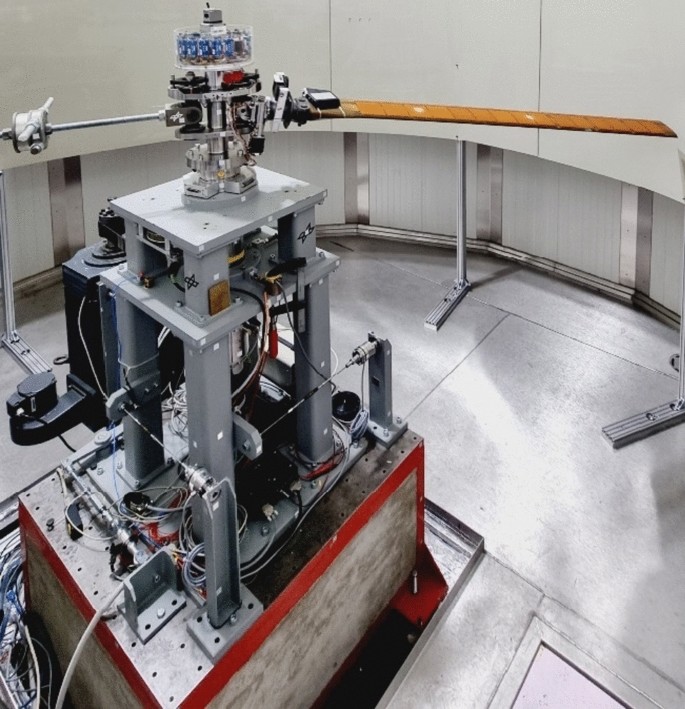
Recommissioning a helicopter blade spin rig

Somewhere in an aerospace facility, a spin rig sits idle, mechanically sound but electronically obsolete. Bringing it back to life means bridging a 30-year technology gap without losing the engineering intent that made it work in the first place. Here's what that actually involves.
View
Text logo reading 'Mbuyamba Engineering' in black font on a transparent background.
Quick Links
About usServicesCase studiesResearchContact
Contact
consulting@mbuyamba.com
© 2026 Mbuyamba Engineering (Pty) Ltd