Haptic Consumer Product - Case Study
Author:
Francis Mbuyamba
Context
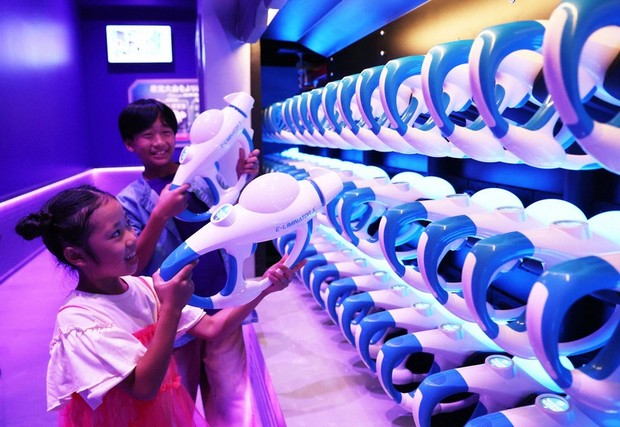
In 2023, Jaycon was engaged by a consumer entertainment brand to design and engineer a themed, interactive consumer product for a major product launch tied to a well-known entertainment property. The product was intended to be an interactive device for a location-based entertainment setting, needed to deliver a premium haptic-feedback experience consistent with the brand's theming, and to survive real-world consumer use. As the lead mechanical engineer on the project, I owned the mechanical architecture from concept art through production handoff.
The Client's Requirements
- Conform to the artistic Intent form
- Weigh less than 1.361kg or 3lb
- Fit within a specific geometric envelop: 431.8 mm x 101.6 mm x 152.4 mm or 17 in x 4in x 6 in
- MIL-STD-810G/H (Method 516)
- Prototypes to Validate Concepts
- Haptic element reinforcement to prevent dislodgment
- Simplified assembly process
- Aggressive <1 year timeline
The Approach
Strategic Preparation
In preparation for this project, I proposed that the team begin with a DFMEA. Doing this would help us understand some of the most pressing items and create a risk landscape, which we would then use to prioritize tasks and assess their durations to accommodate anticipated risks. Bringing together the relevant actors to brainstorm the design and the blaster, and where the project is likely to fail. The outcome of this exercise helped inform us about which questions to ask, given that this was a multi-vendor project that included Jaycon.
In addition to the DFMEA, we had a conversation within the engineering team about how to manage PDM/PLM workflows to ensure revision control while collaborating.
Design
To avoid violating my NDA, I will use proxy words to ensure that no critical information about the device is shared.
The design objective was to create the organic shell of the device and start building from the outside in. To ensure stakeholder requirements we proposed an overmolded design concept to ensure strength and aesthetic design. The critical focus was to maximize ribbing within the internal enclosures to allow for forces to be distributed while drop testing. The provided electronics were to be positioned within the shells such that assembly and disassembly would be quick and easy. We introduced a pseudo-flexible central electronics frame to hold the PCB’s and the haptic element.
Team Organization
Given the tight timeline, we needed to find ways to save time without sacrificing quality and requirements. Using an agile-like methodology we worked to iterate through designs and changes, while coordinating meetings and communications with the electrical team and external stakeholders. I role in the operation was to ensure the devices was designed to be mechanically ready to production. Having technical reviews with the team and communicating those to various stakeholders.
The Outcome
Requirements and Outcomes
1. The device could be designed directly from the artistic intent using CAD knowledge.
2. The average mass of the device was within customer tolerances
3. Overall size of the device was to the customers liking
4. Device has military grade drop protection
5. Protoypes were 3D printed every iteration cycle (more than 8 prototypes delivered)
6. Haptic element was designed with redundancies, eliminate one failure mode that could potentially be harmful to users.
7. ~25% faster assembly time
8. Device design delivered after ~1 year
Reflections / What I'd Do Differently
- The pseudo-flexible central electronics frame was key to compact assembly while reducing overall assembly time. This design was innovative in the fact that it was rigid when assembled but flexible and lightweight when disassembled. This was done to make accessible assembly possible.
- I would reevaluate the over-old design. This perfectly captured the artistic intent but created a nightmare during production due to a fault in the selection of manufacturing methods. A lower-risk solution is to use IMD (In-Mold Decorating). If I had made this suggestion sooner, some time would have been saved.
Relevance
This project illustrates the kind of engineering problem I am now available to take on in my independent practice: situations where client vision, ergonomic constraints, thermal and durability requirements, and production schedule pressure must be addressed together rather than sequentially. If your team is working on a hardware product that needs to bridge creative intent and manufacturable reality, I would welcome a conversation about how I might help.
See our work
Real engineering problems, documented from challenge to solution.