The Case for the Payload-Agnostic UAV: Engineering a Modular Work Platform
Mbuyamba Engineering is disrupting the commercial UAV industry by replacing single-purpose drones with a modular, payload-agnostic platform. Featuring a standardized interface that easily swaps modules for solar, agriculture, or aerial missions, a single airframe drastically lowers the total cost of ownership. This foundational hardware architecture is also built for future software integration, paving the way to evolve from piloted flight into fully autonomous drone swarms.
Prepared by: Francis Kalonji Mbuyamba, BSc ME/AE, EIT
Entity: Mbuyamba Engineering (Pty) Ltd
Date: April 24, 2026
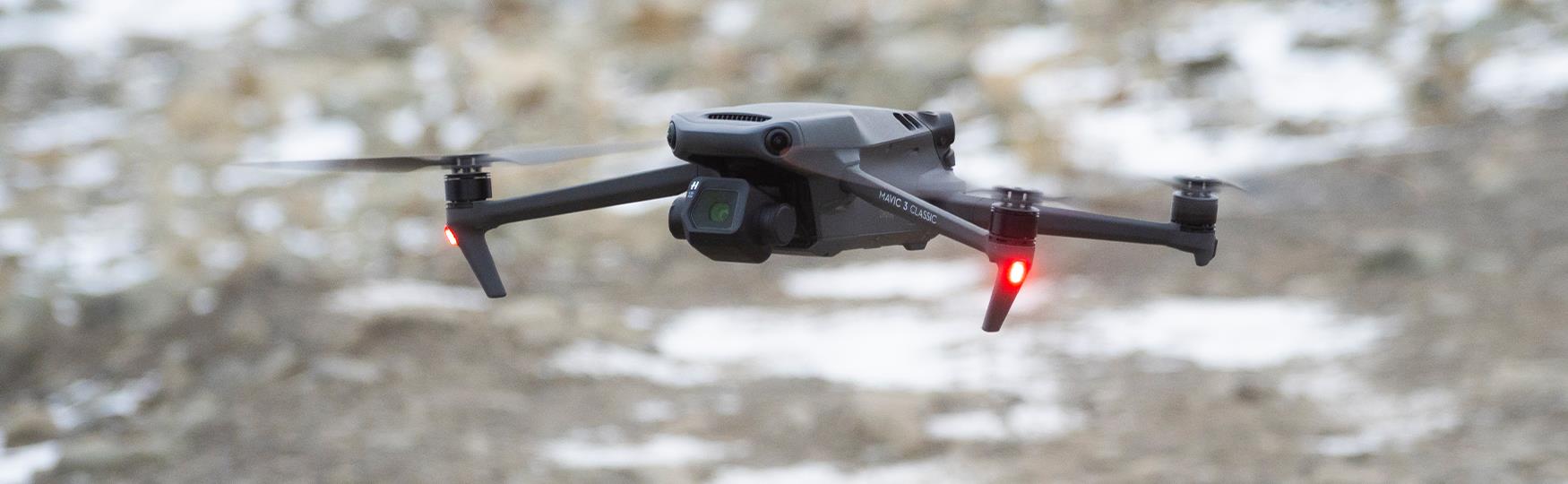
DJI Mavic 3 Quadcopter
1. Executive Summary
The commercial unmanned aerial vehicle (UAV) industry is currently constrained by a single-purpose paradigm. Manufacturers optimize aircraft for specific applications: an agricultural drone carries a permanently mounted multi-spectral sensor; a solar inspection drone uses a specialized thermal payload; an aerial photography drone relies on a dedicated camera gimbal.
For service operators seeking to serve multiple markets, this model requires a fleet of separate, single-purpose aircraft. This multiplies capital expenditure, maintenance overhead, and training requirements.
Mbuyamba Engineering proposes a fundamental shift in hardware architecture: a modular UAV payload platform. By establishing a standardized mechanical and electrical interface, a single airframe can support interchangeable mission modules, converting a single aircraft investment into a multi-purpose work platform.
This white paper details the engineering challenges in designing a payload-agnostic platform and outlines a phased technology roadmap to evolve the hardware into a fully autonomous, multi-node mission-execution system.
2. The Engineering Gap: Control vs. Mechanics
The development of a custom-integrated quadcopter reveals a critical lesson in embedded systems: the mechanical design and the control architecture are not independent problems.
Early iterations using general-purpose microcontrollers (e.g., Arduino) demonstrate that without sufficient processing headroom and sensor fusion sophistication, stable flight is difficult to achieve. A marginally stable control system tightens mechanical tolerances, making every structural flex and environmental disturbance more consequential.
Conversely, purpose-built flight controllers (e.g., KK2, Pixhawk) provide the dedicated control loop architecture necessary for robust stabilization. A robust control system relaxes mechanical constraints, creating a design margin that can be allocated to payload capacity or cost reduction.
Furthermore, retrofitting capabilities such as adding GPS for autonomous position hold expose the limitations of closed architectures. Designing for future capability into the initial architecture is a critical yet often undervalued discipline in hardware development.
3. Designing the Modular Payload Platform
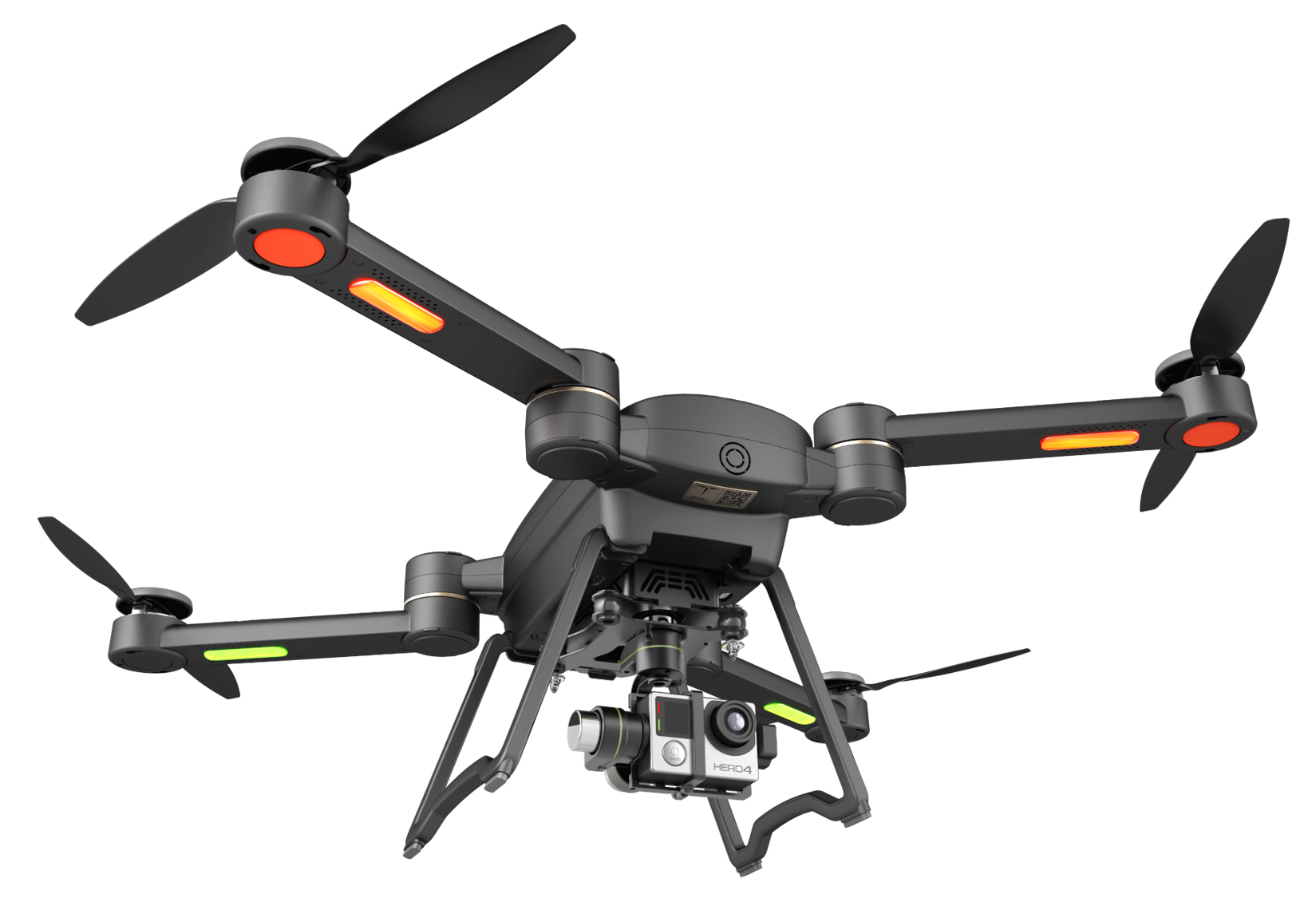
Generic quadcopter concept art
A payload-agnostic UAV platform must solve five simultaneous engineering challenges to achieve true modularity (field changeouts in under five minutes with no tools):
3.1 Weight Budget Management
The mounting system must be as light as structurally possible while meeting the dynamic load requirements of the heaviest intended payload.
3.2 Center of Gravity (CG) Control
A quadcopter's flight characteristics are highly sensitive to CG location. The interface must constrain payloads within a defined CG envelope, or the flight controller must dynamically adapt to different configurations.
3.3 Vibration Isolation
Different payloads require different isolation profiles. The mounting system must provide appropriate attenuation for sensitive optics without over-engineering the mounting for vibration-tolerant fluid systems.
3.4 Electrical Integration
The system requires a standardized connector that provides regulated power (e.g., 12V and 5V rails) and communication buses (UART, I2C, PWM) to enable payloads to interface with the flight controller or companion computer without rewiring.
3.5 The "Tool-Free" Mandate
If swapping a payload requires disassembly, the system is merely reconfigurable rather than modular. The interface must utilize a quick-release mechanism with repeatable alignment features.
4. Application-Specific Engineering Challenges
The true test of a modular interface is its ability to support vastly different dynamic and electrical profiles.
4.1 Solar Panel Cleaning
The Challenge: High fluid mass that dynamically alters the CG as the reservoir depletes.
The Solution: Designing shallow, wide reservoir geometries centered on the airframe CG, coupled with flight controller tuning that compensates for the changing mass.
4.2 Crop Monitoring
The Challenge: Maintaining a nadir (straight-down) viewing angle and isolating high-frequency motor vibration to prevent image blur in multispectral sensors.
The Solution: Implementing a two-stage elastomeric isolation system and configuring flight modes for gentle accelerations to limit airframe pitch.
4.3 Remote Scouting
The Challenge: Managing power budgets and preventing RF interference between live video downlinks (often 5.8GHz) and the primary control link.
The Solution: Physical antenna separation within the payload module design and strict power budget allocation to ensure minimum flight times.
4.4 Aerial Photography
The Challenge: Attenuating high-frequency vibration before it saturates the control bandwidth of a precision 3-axis brushless camera gimbal.
The Solution: A rigid mounting interface to provide a stable reference frame for the gimbal's IMU, while mechanically filtering frequencies above the gimbal's operational bandwidth.
5. Technology Roadmap: The Path to Autonomy
The modular hardware is the foundational layer. Mbuyamba Engineering’s vision extends this hardware into a full autonomy stack.
Establishing the standardized mechanical and electrical interfaces on a piloted airframe.
Layer 2: Autonomous Mission Execution
Transitioning from piloted flight to waypoint-based mission execution. The operator defines the task area, and the UAV autonomously flies the route and manages payload triggering. Hardware selections (e.g., Pixhawk 6X, Raspberry Pi companion computers) made in Layer 1 ensure compatibility with this future software layer.
Layer 3: Multi-Node Swarm Coordination
Software decomposes large-scale tasks across multiple UAV nodes, managing deconfliction, battery sequencing, and data aggregation. The operator interacts with the swarm as a single system.
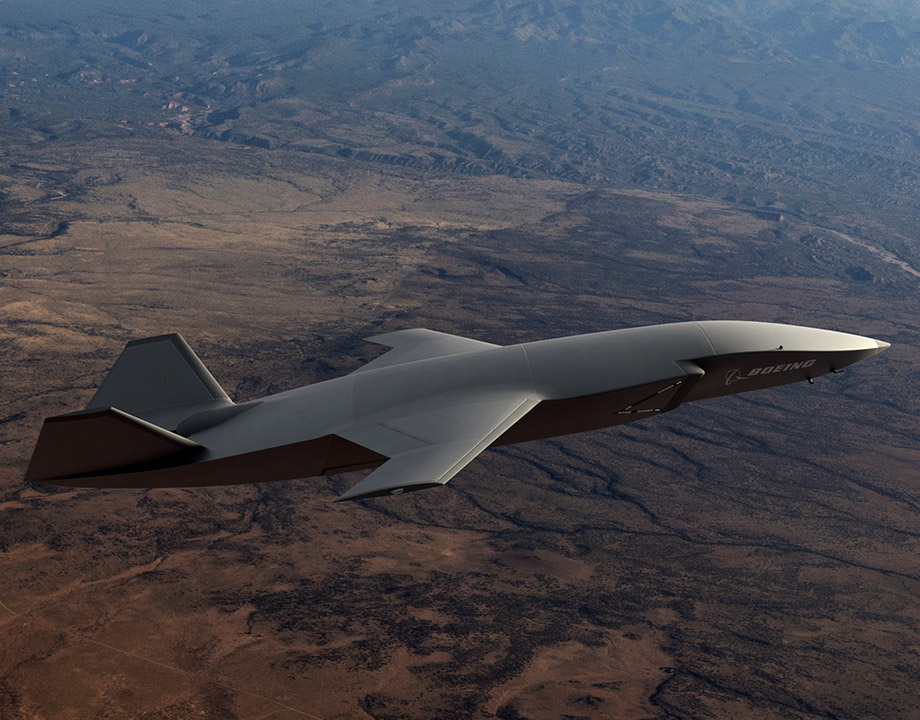
Boeing MQ-28 Ghost Bat
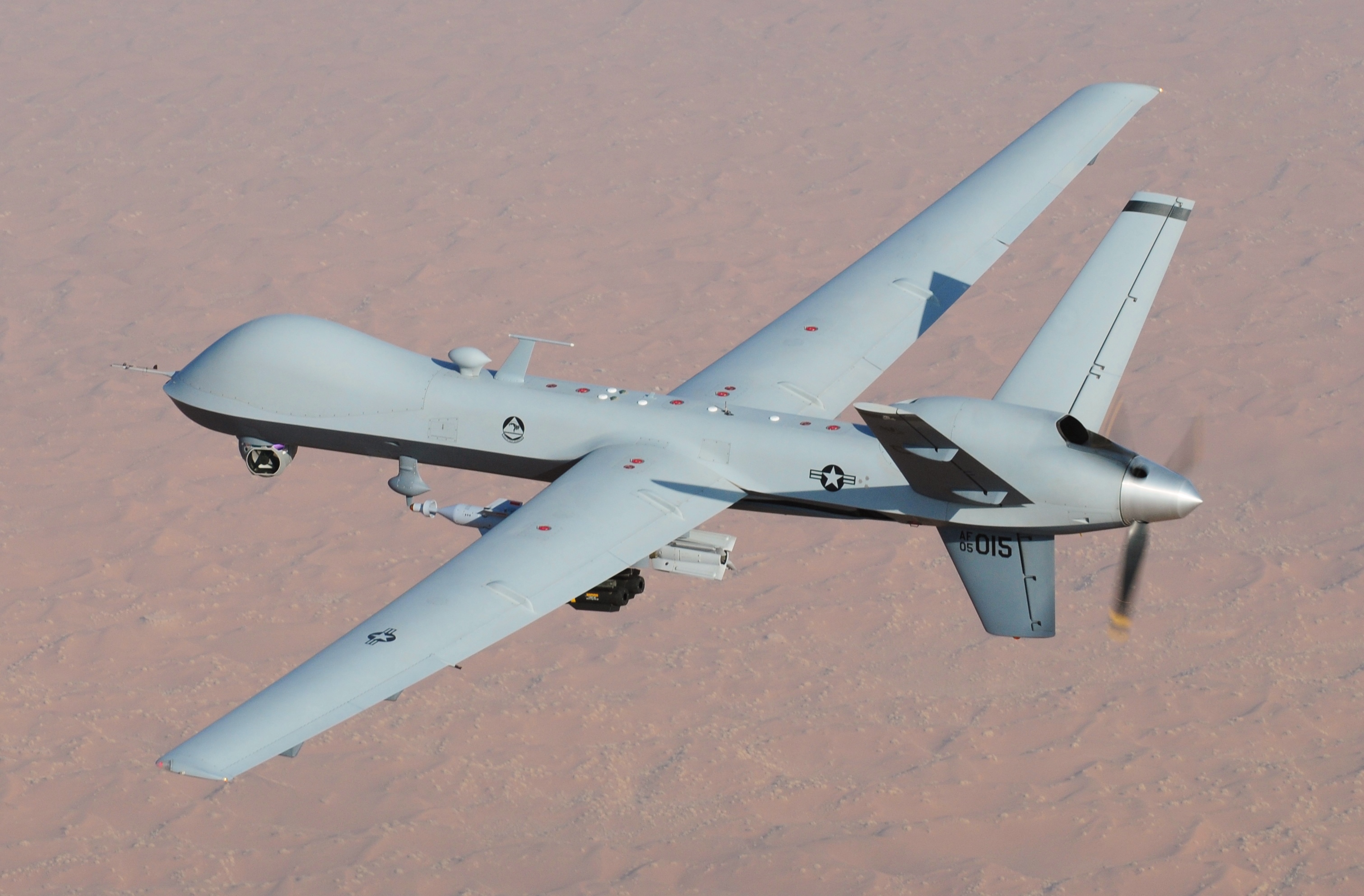
The General Atomics MQ-9 Reaper
6. Conclusion
Platform design is fundamentally a systems integration exercise. Designing a bracket to hold a camera is trivial; designing a standardized architecture that accommodates a camera, a spray system, and a multispectral sensor, without rebuilding the airframe, requires rigorous engineering discipline.
By defining interfaces clearly and managing shared constraints, the modular payload platform drastically lowers the barrier to entry for commercial UAV operations, paving the way for scalable, autonomous aerial services.
Other Research
What else do we think about at Mbuyamba Engineering?